

Blog
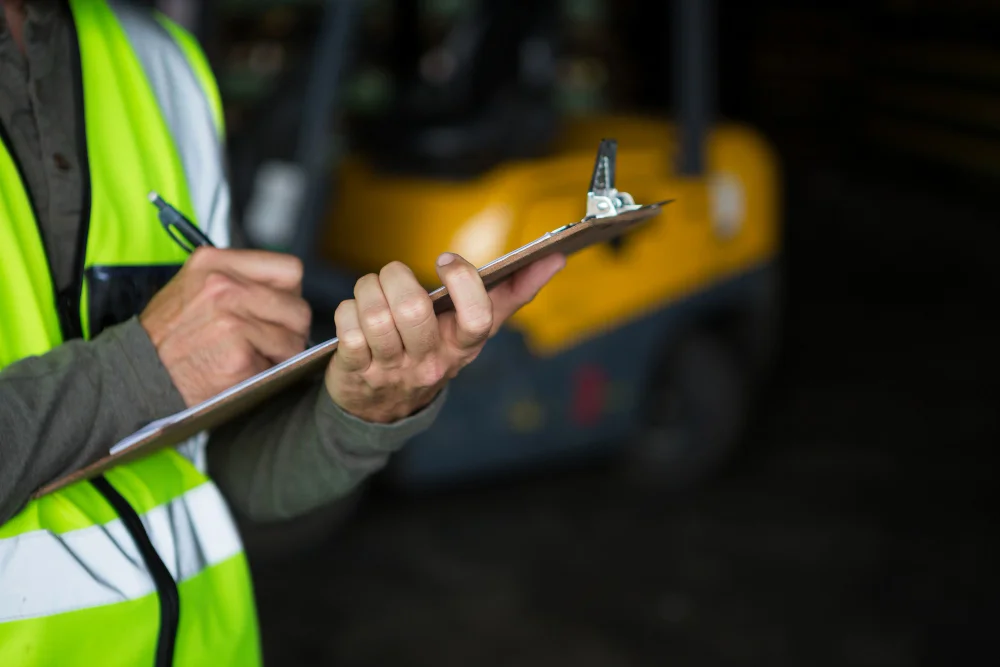
Forklift Inspections & Pre-Operation Checklist - Best Practices for Safe Operations
Perleybrook Team
28 January 2025
Safety & Security
Introduction
Forklifts are critical assets in manufacturing plants, warehouses, logistics centers, and industrial facilities. While they enable efficient material handling, they also present serious safety risks when not properly maintained or inspected. Many workplace incidents occur due to skipped or poorly executed forklift pre-operation inspections.
A structured forklift inspections pre-operation checklist ensures that equipment is safe to operate before every shift. When combined with digital forklift inspection systems and emerging AI-powered forklift inspection technologies, organizations can significantly reduce accidents, downtime, and compliance risks.
This article explains how to conduct forklift pre-operation inspections, outlines a daily forklift inspection checklist, and explores best practices and future trends in forklift safety management.
Why Forklift Pre-Operation Inspections Are Essential
A pre-shift forklift inspection is a systematic evaluation of the forklift’s condition before use. It helps identify mechanical faults, safety hazards, and operational risks that could otherwise lead to accidents or equipment failure.
Key Benefits of Forklift Inspections
- Reduces workplace injuries and property damage
- Improves operator and pedestrian safety
- Ensures regulatory and audit compliance
- Supports preventive forklift maintenance
- Enhances forklift fleet reliability and uptime
Regular inspections are a foundational element of equipment inspection best practices in industrial environments.
Forklift Pre-Operation Inspection Checklist
A comprehensive forklift safety checklist includes both visual and functional checks. These inspections should be performed before each shift.
Visual Inspection Checklist
- Forks, mast, and load backrest condition
- Tire wear, cracks, or low pressure
- Hydraulic hoses, cylinders, and fittings
- Overhead guard integrity
- Seat belt and operator restraint system
- Warning labels and data plates
- Battery cables and connectors (electric forklifts)
- Fuel hoses and connections (IC forklifts)
Operational Inspection Checklist
- Steering and maneuverability
- Service and parking brakes
- Accelerator and inching pedal response
- Horn, lights, alarms, and indicators
- Lift, tilt, and side-shift controls
- Unusual noise, vibration, or overheating
These checks form the core of a forklift daily inspection checklist used across industries.
Best Practices for Forklift Inspections
Use a Standard Daily Forklift Inspection Checklist
Standardization ensures consistency across operators, shifts, and locations. Many organizations maintain a forklift daily inspection checklist PDF, though digital versions are increasingly preferred.
Conduct Inspections Before Every Shift
Forklifts used in multi-shift operations must undergo inspections at the start of each shift, not once per day.
Train Operators on Inspection Procedures
Effective inspections depend on proper forklift operator training, including:
- Identifying early signs of equipment failure
- Understanding safety-critical components
- Knowing when to report and tag equipment
Maintain Accurate Inspection Records
Proper documentation supports:
- Forklift inspection documentation requirements
- Maintenance scheduling
- Incident investigation
- Compliance audits
Digital Forklift Inspection Systems
Paper-based inspections are often incomplete, inconsistent, and difficult to track. Digital forklift inspection systems solve these challenges by replacing manual checklists with automated workflows.
Benefits of Digital Safety Checklists
- Mandatory checklist completion
- Real-time inspection data capture
- Automatic timestamps and operator identification
- Centralized inspection history
- Improved compliance tracking
A digital safety checklist improves accountability while enabling smarter fleet oversight.
AI-Powered Forklift Inspection and Computer Vision
Modern operations are increasingly adopting AI-powered forklift inspection technologies to enhance safety and efficiency.
How AI Improves Forklift Safety
- Computer vision forklift damage detection identifies dents, cracks, and misalignment
- Automated inspection verification
- Real-time alerts for unsafe conditions
- Predictive insights for preventive forklift maintenance
- Integration with forklift fleet management platforms
These systems help organizations move from reactive maintenance to proactive risk prevention.
Reducing Forklift Accidents Through Inspections
Consistent inspections are one of the most effective ways of reducing forklift accidents through inspections. They prevent unsafe equipment from entering operation and reinforce a strong safety culture.
Key outcomes include:
- Fewer mechanical failures during operation
- Improved operator confidence and awareness
- Reduced repair and downtime costs
- Stronger safety compliance performance
Forklift Inspection Compliance and Fleet Management
Effective inspections are closely tied to forklift fleet management. Digital and automated solutions enable:
- Forklift inspection compliance tracking
- Maintenance prioritization based on inspection data
- Audit-ready inspection reports
- Long-term performance and safety analytics
This is especially critical for manufacturing environments, where safety standards and uptime requirements are high.
Future Outlook: Automated and Intelligent Forklift Inspections
The future of forklift inspections lies in connected, intelligent systems. Organizations can expect:
- Wider adoption of automated forklift safety checklists
- Deeper AI and IoT integration
- Real-time fleet-wide safety dashboards
- Predictive maintenance driven by inspection data
As technology advances, forklift inspections will evolve from routine checks into fully automated safety ecosystems.
Conclusion
A well-implemented forklift inspections pre-operation checklist is essential for safe and efficient material handling operations. Daily inspections help prevent accidents, ensure compliance, and extend equipment life.
By transitioning from paper-based processes to digital forklift inspection systems and AI-powered inspection technologies, organizations can achieve higher safety standards, better compliance, and improved operational performance.
Investing in forklift inspection best practices today lays the foundation for safer, smarter, and more resilient industrial operations.