

Blog
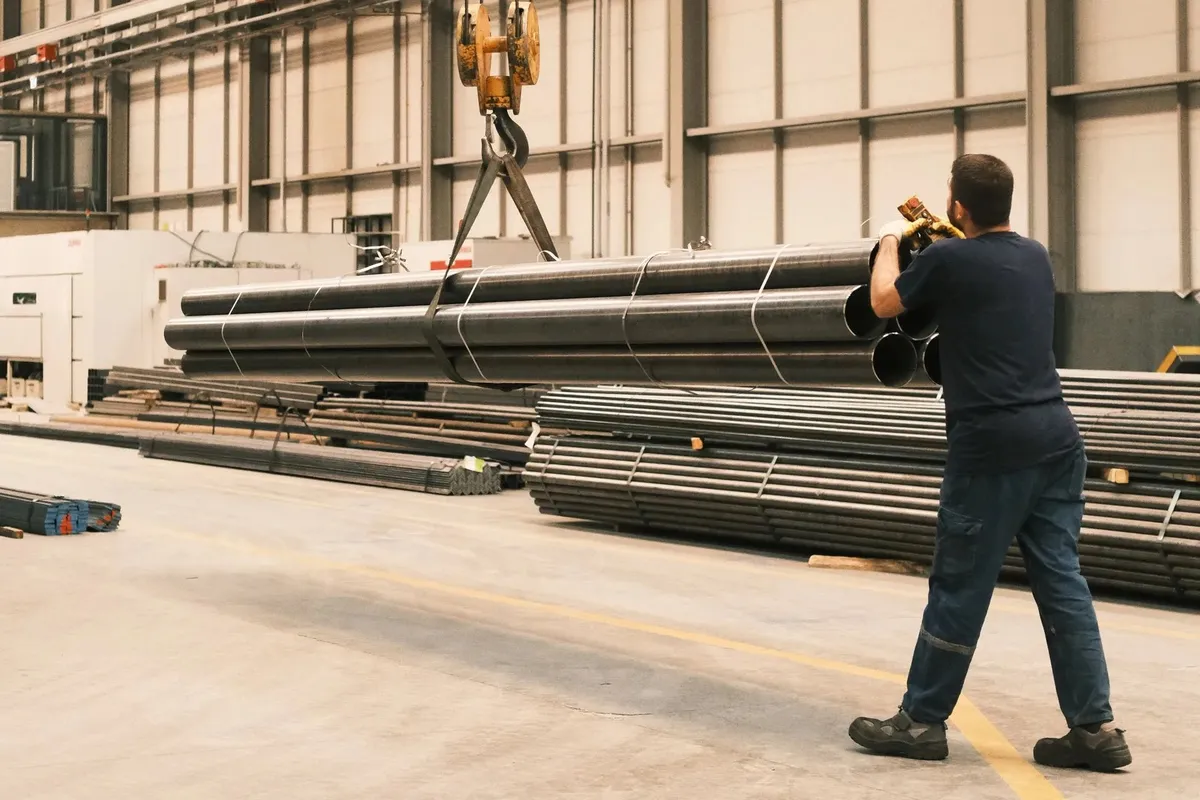
EOT Crane Safety: How AI Prevents Overhead Accidents
Perleybrook Team
02 November 2026
Safety & Security
1. Introduction
Electric Overhead Travelling (EOT) cranes play a critical role in manufacturing plants, warehouses, steel industries, foundries, and heavy engineering facilities. They are used to lift, transport, and position heavy materials across production floors, often moving substantial loads above workers, machinery, and operational areas.
Despite their importance, crane operations involve significant safety risks. Falling loads, collisions with nearby equipment, excessive swinging, restricted operator visibility, and human errors can lead to serious workplace accidents, equipment damage, and production downtime.
Traditional safety measures, including limit switches, warning alarms, regular inspections, and operator training, remain essential. However, these measures may not always identify developing hazards early enough, particularly in busy industrial environments where multiple activities occur simultaneously.
Artificial intelligence (AI) is introducing new possibilities for improving overhead crane safety. By combining intelligent cameras, real-time image processing, object detection, and configurable safety zones, AI-powered systems can help identify potential hazards and alert operators before dangerous situations escalate.
Understanding how AI supports EOT crane safety can help industrial facilities strengthen their existing safety practices, improve operational awareness, and build a more proactive approach to crane collision prevention.
2. What Is EOT Crane Safety?
EOT crane safety refers to the procedures, equipment, and technologies used to ensure that overhead travelling cranes operate safely while lifting and transporting materials.
An EOT crane typically moves along elevated runway rails, with a bridge travelling horizontally across the work area and a hoist lifting or lowering loads. Depending on the crane design, the trolley also moves along the bridge to position materials accurately.
These movements create several potential hazards, particularly when loads travel above people, cranes operate near one another, or the operator has limited visibility of the surrounding area.
A comprehensive overhead crane safety programme focuses on preventing accidents through engineering controls, preventive maintenance, safe operating procedures, employee training, and appropriate monitoring technology.
AI-based safety systems can complement these measures by improving visibility and identifying certain hazards in real time.
3. Common Safety Challenges in EOT Crane Operations
3.1 Blind Spots and Limited Visibility
Crane operators may not have a complete view of the load, surrounding machinery, workers, or the entire travel path. Structural components, suspended materials, and the layout of the facility can create blind spots.
When operators cannot clearly observe an area, it becomes more difficult to identify pedestrians or obstacles before the crane approaches them.
3.2 Crane-to-Crane Collisions
In facilities where multiple overhead cranes share the same runway or operate in adjacent working areas, simultaneous movements can create collision risks.
Without suitable monitoring and coordination, cranes may approach one another too closely, potentially damaging equipment or destabilising loads.
3.3 Pedestrian Movement in Hazardous Areas
Workers may enter areas beneath suspended loads or move close to crane travel paths while performing inspections, maintenance, or production tasks.
Warning alarms and marked exclusion zones can help, but unexpected pedestrian movement may still create dangerous situations.
3.4 Load Swinging and Uncontrolled Movement
Loads may swing during acceleration, deceleration, turning, or sudden stopping. Excessive swinging can bring materials into contact with nearby structures, equipment, or people.
Appropriate lifting practices and operator control remain essential, while suitable monitoring systems may provide additional awareness of certain movement-related hazards.
3.5 Human Error and Operational Pressure
Fatigue, distraction, poor communication, and production pressure can affect decision-making during crane operations.
Safety systems that provide timely, clear warnings can support operators in recognising hazards, but they cannot replace competency, supervision, or established operating procedures.
4. What Is AI-Based EOT Crane Safety?
AI-based EOT crane safety uses artificial intelligence and computer vision to monitor crane operating areas, identify selected objects or people, and recognise conditions that may indicate a potential hazard.
Depending on the solution, industrial cameras can capture images of the working environment while an AI processing unit analyses the video feed. The system may identify pedestrians, vehicles, structural obstacles, or other configured objects within defined monitoring areas.
When a person or object enters a designated risk zone, the system can generate visual or audible alerts to notify the operator or relevant personnel.
More advanced solutions may integrate with suitable crane control systems to support predefined safety responses. Such functions require application-specific engineering, validation, and compatibility with the crane’s existing control architecture.
The primary purpose of AI is to provide an additional layer of situational awareness, helping operators identify certain hazards that may otherwise go unnoticed.
5. How AI Improves Overhead Crane Safety
5.1 Real-Time Pedestrian Detection
AI-enabled cameras can analyse video feeds to identify people within designated crane operating areas.
For example, when workers enter a configured exclusion zone near a crane’s travel path, the system can trigger a warning. This gives operators an additional opportunity to assess the situation and take appropriate action.
Pedestrian detection is particularly useful in manufacturing facilities where workers move between workstations, storage areas, and material-handling zones.
5.2 Intelligent Crane Collision Prevention
Crane collision prevention is an important consideration in facilities with multiple cranes, shared runways, or closely spaced equipment.
Depending on the system design, AI-based monitoring can identify selected objects or equipment within monitored areas and alert operators when a potential conflict is detected.
However, camera-based AI monitoring alone should not be assumed to provide reliable crane-to-crane distance measurement or automatic collision avoidance in every application. Where precise separation distances and coordinated movement are required, dedicated anti-collision sensors, position encoders, or engineered control systems may be necessary.
Combining suitable detection technology with validated control mechanisms can provide a more comprehensive approach to collision risk management.
5.3 Monitoring Restricted and Hazardous Zones
AI systems can be configured to monitor selected areas around a crane, such as load-handling zones, restricted access points, and areas near critical machinery.
If a person enters a monitored area, the system can generate a warning according to its configuration.
These zones should be designed around the crane’s movement, load dimensions, stopping characteristics, and site-specific risk assessment. They should complement physical barriers and established exclusion-zone procedures.
5.4 Improving Operator Awareness
An operator’s view may be restricted by suspended loads, building structures, or the distance between the control station and the lifting area.
AI-enabled camera systems can provide an additional source of information by identifying selected hazards and communicating them through in-cabin displays, warning indicators, or alarms.
This additional awareness can support more informed decisions during lifting, travelling, and load positioning.
5.5 Supporting Safer Material Handling
AI-based monitoring can help identify people or obstacles in areas where loads are being moved. This is particularly valuable when large materials obstruct visibility or when multiple activities occur within the same workspace.
The system can alert the operator to potential hazards, allowing the situation to be assessed before the operation continues.
AI detection does not independently guarantee load stability or safe lifting. Load limits, rigging practices, hoist condition, and operator procedures must still be managed through appropriate engineering and operational controls.
6. Key Technologies Used in AI-Powered Crane Safety
Several technologies can contribute to an effective overhead crane safety solution.
Computer vision: Cameras capture the surrounding environment, providing visual information for monitoring crane operating areas.
Artificial intelligence and object detection: AI algorithms analyse images to identify pedestrians, equipment, and other objects supported by the system.
Configurable detection zones: Software-defined areas can be established to trigger warnings when selected objects enter designated locations.
Edge computing: An onboard processing unit can analyse video locally, supporting real-time processing without requiring every frame to be sent to a remote server.
Radar and proximity sensors: These technologies can supplement camera-based monitoring where distance measurement or movement detection is required.
Industrial control integration: Where properly engineered, monitoring systems can exchange signals with crane controls to support predefined safety functions.
The combination of technologies should be selected according to the specific risks, required response times, environmental conditions, and safety performance requirements of the application.
7. AI-Based Monitoring vs. Traditional Crane Safety Systems
Traditional crane safety equipment remains fundamental to safe operations. AI-based monitoring serves a different but complementary purpose.
| Safety measure | Primary function | Important consideration |
|---|---|---|
| Limit switches | Restrict movement at defined travel limits | Must be correctly installed and maintained |
| Overload protection | Helps prevent operation beyond configured load limits | Does not detect every surrounding hazard |
| Warning alarms | Alert workers to crane movement | Depends on audibility and human response |
| Proximity or anti-collision sensors | Detect defined distance or position conditions | Coverage depends on sensor design and configuration |
| CCTV monitoring | Provides visual observation | Often requires a person to interpret the video |
| AI-powered vision | Identifies supported objects and configured hazards | Performance depends on system validation and environmental conditions |
The most effective strategy is not to replace existing crane safety equipment with AI, but to integrate suitable technologies into a coordinated safety programme.
8. How to Implement AI for EOT Crane Safety
Successful implementation begins with understanding the actual risks within the facility.
Step 1: Conduct a Site-Specific Risk Assessment
Identify crane travel routes, lifting areas, pedestrian access points, shared runways, blind spots, and locations where collisions or load-related incidents could occur.
Review existing accident records and near misses to identify recurring problems.
Step 2: Define the Required Detection Capabilities
Determine whether the main requirement is pedestrian detection, obstacle monitoring, crane-to-crane collision prevention, improved operator visibility, or a combination of these functions.
Different requirements may call for different sensors, camera configurations, and control mechanisms.
Step 3: Select Suitable Hardware and Software
Choose cameras, processing units, sensors, and monitoring software designed for the industrial environment.
Consider dust, vibration, temperature, lighting, mounting locations, and the potential for camera obstruction.
Step 4: Configure Detection Zones and Alerts
Set up monitoring areas based on the facility’s layout and risk assessment. Establish suitable alert levels and confirm that operators can recognise and respond to the warnings.
Step 5: Test Under Actual Operating Conditions
Validate the system during representative crane movements, load-handling activities, lighting conditions, and pedestrian interactions.
Testing should include false alerts, missed detections, communication failures, and the behaviour of any integrated safety functions.
Step 6: Train Operators and Maintenance Personnel
Explain the system’s purpose, limitations, warning signals, inspection requirements, and response procedures.
Personnel should understand that AI monitoring supplements, rather than replaces, established safety practices.
Step 7: Review Performance Regularly
Monitor system availability, detection performance, near misses, and maintenance issues. Reassess the configuration whenever the crane layout or operating conditions change.
9. Best Practices for Improving EOT Crane Safety
AI is most effective when combined with established engineering and operational controls.
- Maintain equipment regularly: Inspect hoists, brakes, wire ropes, hooks, limit switches, and other safety-critical components according to applicable requirements and manufacturer guidance.
- Establish exclusion zones: Prevent unauthorised personnel from entering hazardous areas and avoid travelling suspended loads over people wherever practicable.
- Train crane operators: Ensure operators understand load limits, safe lifting practices, communication procedures, and emergency responses.
- Improve visibility: Use appropriate camera systems, lighting, and operational procedures to address blind spots.
- Implement suitable anti-collision controls: Use engineered systems for applications requiring precise crane separation or coordinated movement.
- Investigate incidents and near misses: Identify root causes and update procedures, training, or equipment where necessary.
- Avoid over-reliance on automation: Operators and supervisors must continue to follow approved procedures and respond appropriately to hazards.
- Validate integrated safety functions: Any automatic stopping or control intervention must be assessed and tested by qualified personnel.
10. The Future of AI in Overhead Crane Safety
As industrial facilities adopt more connected and automated systems, AI is becoming an increasingly valuable tool for improving workplace awareness.
Future applications may combine AI-powered vision with position sensors, proximity detection, equipment monitoring, and industrial control platforms. This could support more comprehensive monitoring of crane travel, pedestrian access, and interactions between lifting equipment.
AI may also contribute to safety analysis by helping organisations identify recurring hazardous situations and locations that require additional controls. Where appropriate data is available, this information can support targeted training, maintenance planning, and workplace improvements.
However, the value of these technologies depends on reliable detection, appropriate integration, transparent operating procedures, and regular performance validation.
The long-term objective is to build a layered safety approach in which intelligent monitoring complements established engineering controls and helps organisations make better-informed safety decisions.
11. Conclusion
EOT cranes are essential to industrial productivity, but their operation presents significant risks when heavy loads, moving equipment, and workers share the same environment.
AI-powered safety systems can strengthen overhead crane safety by identifying pedestrians, monitoring selected hazardous areas, improving operator awareness, and supporting timely warnings. When combined with suitable proximity sensors and engineered anti-collision controls, these technologies can contribute to a more comprehensive crane collision prevention strategy.
Nevertheless, AI is not a substitute for reliable crane equipment, regular inspections, operator competency, physical exclusion zones, or safe lifting procedures.
The most effective approach combines appropriate technology with a site-specific risk assessment, validated safety controls, and continuous improvement. By adopting this layered strategy, industrial facilities can strengthen EOT crane safety while supporting safer and more efficient material-handling operations.
Frequently Asked Questions
1. What is EOT crane safety?
EOT crane safety involves the equipment, procedures, inspections, and controls used to prevent accidents during overhead crane operations, including collisions, falling loads, and hazardous interactions with workers.
2. How does AI improve overhead crane safety?
AI can analyse camera feeds to identify supported objects and pedestrians, monitor configured risk zones, and generate alerts when potential hazards are detected.
3. Can AI prevent crane-to-crane collisions?
AI monitoring can support awareness of potential conflicts, but reliable collision prevention may require dedicated proximity sensors, position measurement, or coordinated control systems. The solution must be designed and validated for the application.
4. Can AI detect workers beneath suspended loads?
Depending on camera placement, visibility, and system capabilities, AI may identify workers within monitored areas beneath or near suspended loads and generate warnings. Performance should be tested under actual site conditions.
5. Does AI replace traditional crane safety equipment?
No. AI should complement limit switches, overload protection, brakes, anti-collision systems, inspections, and safe operating procedures.
6. What industries can benefit from AI-powered crane safety?
Manufacturing, steel production, foundries, warehouses, ports, heavy engineering, and other facilities using overhead cranes may benefit, depending on their specific operational risks and detection requirements.
7. What should businesses consider before implementing an AI crane safety system?
Businesses should evaluate the hazards to be addressed, detection coverage, environmental conditions, hardware compatibility, integration requirements, validation procedures, maintenance, and operator training