

Blog
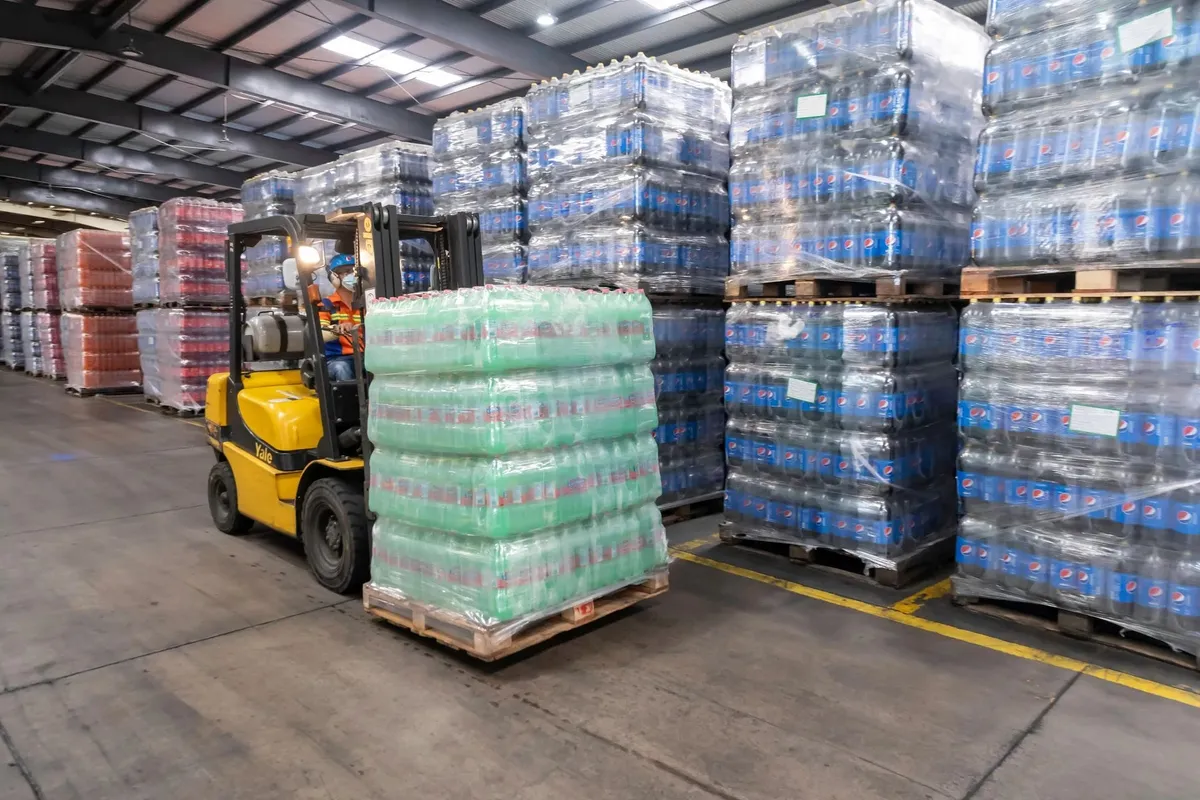
Forklift Pedestrian Detection Systems: How They Work and Which Type to Choose
Perleybrook Team
02 November 2026
Warehouse Safety
1. Introduction
Forklifts play a vital role in warehouses, manufacturing facilities, distribution centres, and logistics operations. However, when forklifts operate alongside pedestrians, even routine movements can create serious safety risks. Restricted visibility, blind spots, congested aisles, and unexpected pedestrian movements can increase the likelihood of collisions and workplace injuries.
Traditional safety measures, such as mirrors, warning alarms, marked walkways, and operator training, remain essential. However, these measures may not always provide sufficient awareness in busy industrial environments.
Forklift pedestrian detection systems offer an additional layer of protection by identifying people near moving vehicles and alerting operators to potential hazards. Depending on the technology, these systems can detect pedestrians, monitor their proximity, and support predefined safety responses.
Understanding how these systems work and which technology best suits a facility is essential for improving forklift pedestrian safety and creating safer industrial workplaces.
2. What Is a Forklift Pedestrian Detection System?
A forklift pedestrian detection system is a safety solution designed to identify people within or near a forklift’s operating area. It can monitor the front, rear, sides, or multiple areas around the vehicle, depending on its configuration.
When a pedestrian enters a designated detection area, the system may generate an audible alarm, visual warning, or in-cabin notification. Advanced solutions can analyse pedestrian movement and proximity to identify potentially dangerous interactions.
Some systems can also integrate with vehicle controls to support speed reduction or other approved safety responses. These capabilities vary by product and must be validated for the intended application.
The primary objective is to improve operator awareness, strengthen forklift safety zones, and reduce the risk of collisions between vehicles and pedestrians.
3. Why Is Forklift Pedestrian Safety Important?
Forklift operations involve constant movement, changing loads, and interactions between people and vehicles. Several factors make pedestrian safety particularly challenging.
Blind spots and restricted visibility: Forklift masts, bulky loads, storage racks, and structural obstacles can obstruct the operator’s view, making it difficult to identify nearby pedestrians.
High-traffic work areas: Warehouses frequently have forklifts, employees, contractors, and visitors moving through shared spaces. Congestion increases the likelihood of unexpected encounters.
Reversing and turning movements: Pedestrians may approach from the rear or sides while a forklift reverses or turns in a confined area.
Changing workplace conditions: Temporary storage, shifting pedestrian routes, and changing traffic patterns can introduce new hazards even in familiar work areas.
Human-factor limitations: Operators and pedestrians may become distracted, misjudge distances, or fail to notice warning signals.
Traditional safety measures are important, but their effectiveness depends on proper implementation and consistent compliance. Combining these measures with suitable detection technology can improve awareness and provide additional opportunities to respond to hazards.
4. How Do Forklift Pedestrian Detection Systems Work?
Although different technologies use different detection methods, most systems follow a similar process.
Step 1: Monitor the surroundings
Sensors or cameras continuously monitor designated areas around the forklift. Coverage depends on the number, placement, and capabilities of the installed devices.
Step 2: Detect pedestrians or nearby objects
The system identifies people or objects within its detection range. Radar measures reflected radio waves, ultrasonic sensors measure distance using sound waves, RFID systems detect compatible tags, and AI-enabled cameras analyse visual information.
Step 3: Assess potential risk
More advanced systems consider factors such as distance, movement direction, vehicle speed, and configured detection zones. This can help identify situations that require greater attention.
Step 4: Alert the operator
When a person enters a configured warning area, the system may activate an audible alarm, visual indicator, or in-cabin warning. Some solutions provide different warning levels according to proximity or risk.
Step 5: Support a safety response
Depending on the system and its integration, additional responses may include speed limitation or another predefined control function. Any automatic intervention must be appropriately engineered and validated.
Detection systems do not guarantee collision prevention. Their effectiveness depends on installation, configuration, operating conditions, and how they are integrated into the facility’s broader safety programme.
5. Types of Forklift Pedestrian Detection Systems
5.1 Radar-Based Systems
Radar-based systems use radio waves to detect objects and estimate their distance and, in some implementations, relative movement.
Advantages:
- Can operate in low-light conditions.
- Can provide proximity and movement information.
- Suitable for defined detection areas when correctly configured.
Limitations:
- May not distinguish pedestrians from all other objects.
- Detection performance depends on sensor placement and the surrounding environment.
- Coverage varies between models.
Best suited for: Applications requiring proximity or movement detection, particularly where lighting conditions vary.
5.2 Ultrasonic Systems
Ultrasonic systems use sound waves to measure the distance between a sensor and nearby objects.
Advantages:
- Useful for close-range obstacle detection.
- Can support low-speed manoeuvring.
- Relatively straightforward for specific proximity applications.
Limitations:
- Usually have a limited detection range.
- May not identify whether an object is a person.
- Performance depends on object shape, sensor placement, and environmental conditions.
Best suited for: Close-range obstacle awareness and confined-space manoeuvring.
5.3 RFID-Based Systems
Radio-frequency identification (RFID) systems use compatible tags carried by pedestrians and readers installed on forklifts or in designated areas. When a tag enters the reader’s effective range, the system can alert the operator.
Advantages:
- Can identify tagged personnel.
- Useful in controlled workplaces with established tag procedures.
- Supports person-specific detection when appropriately configured.
Limitations:
- Workers must carry compatible tags.
- Untagged visitors may not be detected.
- Detection reliability depends on reader placement and radio-frequency conditions.
Best suited for: Controlled industrial environments where tag compliance can be maintained.
5.4 Camera-Based Systems
Camera-based systems provide visual monitoring of the forklift’s surroundings. Basic systems help operators see areas that may otherwise be difficult to observe, while advanced systems can analyse images to identify pedestrians.
Advantages:
- Provide visual information about the operating environment.
- Can improve awareness of blind spots.
- Multiple cameras can provide broader coverage when appropriately installed.
- AI-enabled versions can recognise pedestrians.
Limitations:
- Performance can be affected by poor lighting, glare, dirt, and camera obstruction.
- Coverage depends on camera placement and field of view.
- Automated detection accuracy must be validated.
Best suited for: Facilities requiring improved visibility and visual monitoring around forklifts.
5.5 AI-Powered Pedestrian Detection Systems
AI-powered systems use computer vision and intelligent processing to recognise pedestrians and assess potential risks. Depending on the design, multiple cameras can monitor different areas around a forklift while an onboard processing unit analyses the video feeds.
These systems can use configurable detection zones to generate warnings when pedestrians enter potentially hazardous areas.
Advantages:
- Can recognise pedestrians rather than simply detecting nearby objects.
- Supports configurable detection zones.
- Can combine multiple camera views for broader awareness.
- May provide real-time alerts and support validated safety responses.
- Suitable for complex environments with multiple pedestrian access points.
Limitations:
- Performance depends on camera quality, installation, environmental conditions, and AI model validation.
- Different products offer different detection ranges and response capabilities.
- Requires suitable configuration, testing, and maintenance.
Best suited for: Busy warehouses, manufacturing facilities, and industrial sites with complex traffic patterns and significant blind-spot risks.
6. Comparing Different Detection Technologies
| Technology | Main capability | Key limitation | Suitable application |
|---|---|---|---|
| Radar | Proximity and movement detection | Limited pedestrian classification in some systems | Defined detection zones |
| Ultrasonic | Close-range obstacle detection | Limited range | Low-speed manoeuvring |
| RFID | Detection of tagged personnel | Untagged people may be missed | Controlled workplaces |
| Camera-based | Visual monitoring and potential pedestrian recognition | Visibility and coverage constraints | Improved operator awareness |
| AI-powered vision | Pedestrian recognition and configurable risk monitoring | Requires validation and correct installation | Complex, high-traffic environments |
No single technology is suitable for every facility. Some operations may benefit from combining technologies to address different risks. The selection should be based on a site-specific risk assessment rather than technology alone.
7. How to Choose the Right Detection System
Selecting an appropriate system requires a clear understanding of the facility’s layout, vehicle movements, pedestrian behaviour, and safety requirements.
Assess the site risks: Identify intersections, narrow aisles, loading bays, reversing areas, and locations where visibility is restricted.
Define detection coverage: Determine whether the forklift requires front, rear, side, or wider surrounding coverage. Consider mast obstructions, load dimensions, and turning movements.
Evaluate detection capabilities: Establish whether the system detects objects, identifies pedestrians, or assesses potential collision risks. Request performance evidence relevant to the intended environment.
Consider environmental conditions: Assess lighting, dust, vibration, moisture, and the possibility of sensors or cameras becoming obstructed.
Check integration options: Review available warning mechanisms and any supported vehicle-control integrations. Confirm compatibility with the specific forklift model.
Evaluate maintenance requirements: Consider installation, calibration, inspection, cleaning, and technical support.
Measure effectiveness: Monitor system availability, hazardous interactions, warning response times, and near-miss trends. Use these findings to improve safety procedures.
8. Understanding Forklift Safety Zones
Forklift safety zones are designated areas around a vehicle where pedestrian proximity may create a hazard. Electronic detection systems can use configured zones to trigger different levels of warning.
For example:
- Warning zone: A pedestrian enters an area where the operator should increase awareness.
- High-risk zone: A pedestrian approaches an area requiring a more urgent warning.
- Critical zone: A person enters a configured area that may require an immediate warning or an approved automatic response.
These are illustrative categories rather than universal distances or standardised zone definitions. The actual boundaries should account for vehicle speed, stopping distance, operating conditions, pedestrian movement, and system capabilities.
Electronic zones should complement physical barriers, designated pedestrian routes, speed controls, and safe operating procedures. They should not replace these foundational safety measures.
9. Best Practices for Improving Warehouse Pedestrian Safety
Technology works best when integrated into a comprehensive safety programme.
Separate pedestrians and forklifts: Use physical barriers, marked walkways, designated crossings, and controlled access points wherever practical.
Establish traffic rules: Define forklift routes, speed limits, reversing procedures, and right-of-way requirements.
Train employees: Ensure operators and pedestrians understand blind spots, warning signals, safe crossing practices, and system limitations.
Inspect equipment regularly: Check sensors, cameras, mounting points, wiring, alarms, and system status according to the manufacturer’s recommendations.
Investigate near misses: Identify recurring hazards and determine whether changes to traffic flow, detection zones, or operating procedures are necessary.
Avoid over-reliance on technology: Operators must remain alert, maintain safe speeds, and follow established procedures.
Review performance periodically: Reassess the system whenever the warehouse layout, fleet, traffic patterns, or operating conditions change.
10. How AI Is Transforming Forklift Pedestrian Safety
Artificial intelligence is expanding the capabilities of industrial safety systems by enabling visual recognition and real-time analysis.
AI-enabled vision systems can identify pedestrians within camera views and monitor their positions relative to configured safety zones. Depending on the solution, they can provide targeted warnings when people enter potentially hazardous areas.
When multiple camera views are combined with onboard processing, these systems can improve awareness of areas that are difficult for operators to monitor directly.
For industrial operators, the benefit is an additional layer of awareness that supports existing safety measures. However, AI is not a substitute for physical segregation, operator training, risk assessment, or validated safety controls. Its effectiveness depends on suitable hardware, correct configuration, testing, and ongoing maintenance.
11. Conclusion
Forklift pedestrian detection systems play an important role in reducing risks where people and material-handling vehicles share the same workspace. Radar, ultrasonic, RFID, camera-based, and AI-powered technologies each provide different capabilities and limitations.
The right choice depends on the facility’s risk profile, required detection coverage, environmental conditions, and desired response. While simpler technologies can address specific detection requirements, AI-powered systems can offer additional pedestrian recognition and configurable risk monitoring for complex industrial environments.
Ultimately, effective forklift pedestrian safety requires a combination of suitable technology, well-designed forklift safety zones, physical traffic separation, employee training, and continuous improvement.
By evaluating these factors together, warehouses and industrial facilities can make informed decisions that support safer operations and stronger warehouse pedestrian safety.
Frequently Asked Questions
1. What is the purpose of a forklift pedestrian detection system?
It detects pedestrians near a forklift and alerts the operator to potential hazards. Some systems also support approved automatic safety responses.
2. Which detection system is best for warehouses?
The best option depends on the warehouse layout, traffic density, lighting, and risk assessment. AI-powered vision may suit complex environments requiring pedestrian recognition, while radar, ultrasonic, or RFID systems may be appropriate for specific applications.
3. Can these systems work in low-light conditions?
Some radar-based systems operate effectively in low light. Camera performance depends on the camera, illumination, and system design. The chosen system should be tested under actual operating conditions.
4. Are forklift safety zones the same in every facility?
No. Zones should be configured according to forklift speed, stopping performance, site layout, pedestrian movement, and system capabilities.
5. Can AI prevent every forklift-pedestrian collision?
No. AI can improve awareness and support timely warnings, but no detection system guarantees that every collision will be prevented. Technology must complement established safety procedures and appropriate physical safeguards.
6. What should businesses evaluate before installation?
Businesses should assess detection coverage, accuracy, environmental suitability, forklift compatibility, alert options, maintenance requirements, and evidence of performance in the intended operating environment.