

Blog
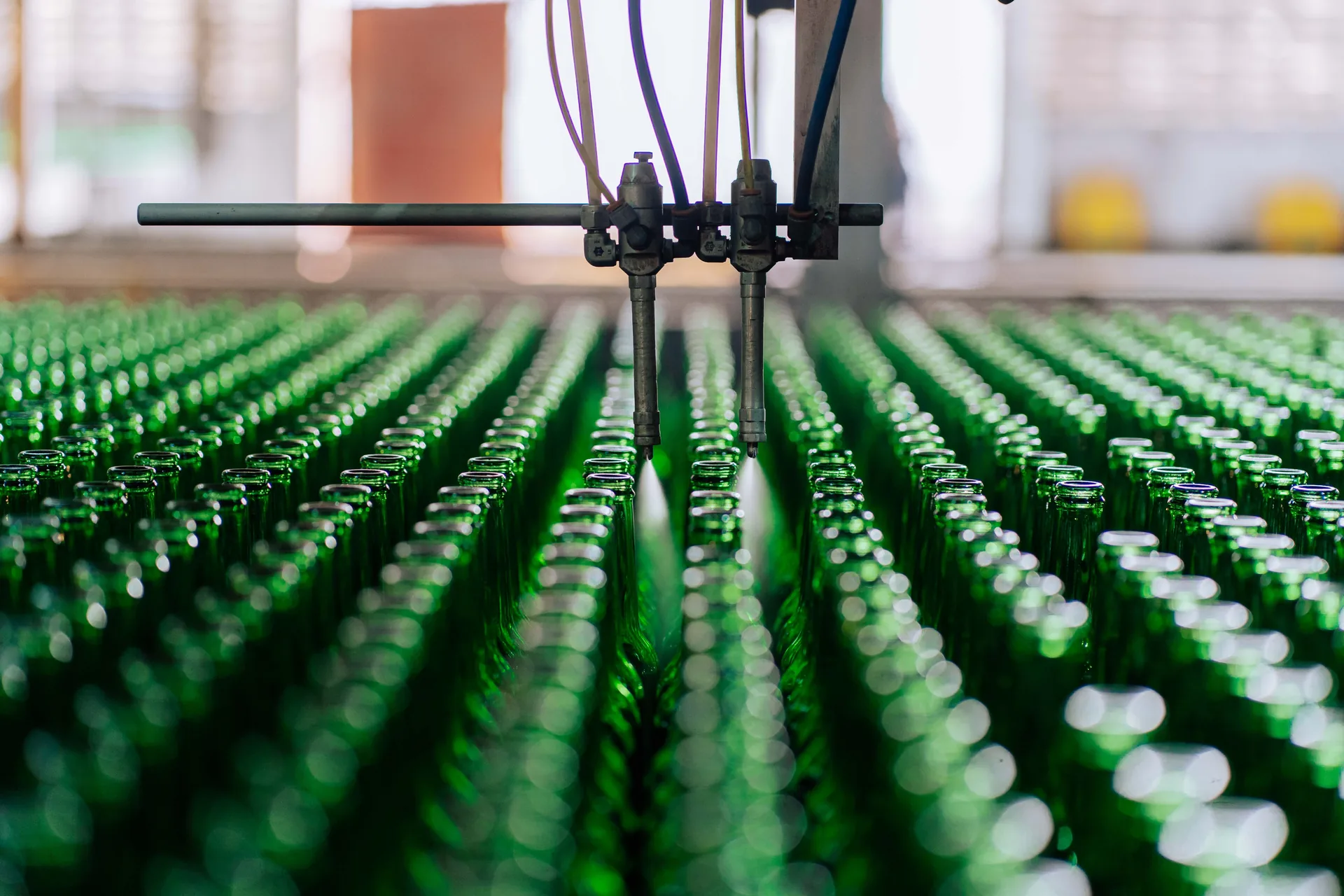
What Is Automated Defect Detection? Benefits, Applications & How It Works
Perleybrook Team
14 September 2026
Manufacturing
In modern manufacturing, quality inspection is no longer limited to checking finished products manually. As production lines become faster and more automated, manufacturers need inspection systems that can identify defects quickly, consistently, and in real time.
This is where automated defect detection and AI-powered machine vision are becoming increasingly important.
Perleybrook Labs develops AI-powered industrial vision and automation solutions that help industries move toward smarter, safer, and more efficient operations. By combining AI, computer vision, industrial cameras, and edge computing, technologies such as these can be applied not only to workplace safety but also to automated inspection and industrial defect detection.
What Is Automated Defect Detection?
Automated defect detection is the process of using cameras, machine vision, artificial intelligence, and image-processing technologies to automatically identify defects or abnormalities in products, components, and manufacturing processes.
Instead of depending entirely on a human inspector to examine every product, an automated system continuously captures and analyses visual information.
Depending on the application, an automated inspection system can identify:
- Scratches and surface damage
- Cracks and fractures
- Dents and deformation
- Missing components
- Incorrect assembly
- Surface irregularities
- Colour or texture variations
- Welding abnormalities
- Printing and labelling errors
- Packaging defects
The objective is not simply to identify a defective product. The larger goal is to make quality inspection faster, more consistent, traceable, and data-driven.
How Does Automated Defect Detection Work?
An automated defect detection system generally follows a simple process:
Capture → Analyse → Detect → Decide → Respond
1. Image Capture
Industrial cameras are positioned around the production process to capture images or video of the product.
The camera and lens configuration depends on the application, inspection area, product dimensions, and type of defect being detected.
Good lighting and consistent image capture are critical because the quality of the input directly affects the inspection process.
2. Image Processing
The captured images are processed to highlight the features that matter for inspection.
The system can analyse characteristics such as:
- Shape
- Size
- Edges
- Texture
- Colour
- Position
- Surface condition
Traditional machine vision can use predefined rules to evaluate these characteristics.
3. AI-Based Analysis
With AI defect detection, artificial intelligence models analyse the captured images to recognise patterns associated with defects.
The system can be trained using images of acceptable and defective products. This allows the AI model to learn the visual characteristics of different conditions.
This is particularly useful when defects are irregular or difficult to define using fixed inspection rules.
4. Defect Identification
The system evaluates the image and determines whether the product or component meets the required quality criteria.
Depending on the solution, the defect can also be classified according to its type, position, or severity.
5. Automated Response
Once a defect is detected, the system can trigger an appropriate action.
For example:
- Reject the defective product
- Alert an operator
- Stop or slow down a production process
- Mark the defective component
- Record the inspection result
- Send data to a production or quality-management system
This creates a complete automated inspection workflow rather than simply generating an image or alert.
The Role of Machine Vision in Automated Inspection
Machine vision is one of the fundamental technologies behind automated inspection.
A machine vision system allows industrial equipment to capture and interpret visual information using cameras, lighting, image-processing systems, and software.
When AI is added to machine vision, the system can go beyond simple rule-based inspection.
For example, a conventional vision system may be programmed to identify whether a component is present in a particular location. An AI-powered system can potentially learn the difference between normal variations and more complex visual abnormalities.
This makes AI-powered vision particularly valuable for modern manufacturing environments where products and defects can vary considerably.
How Perleybrook Can Enable AI-Powered Industrial Vision
Perleybrook Labs’ experience in AI-powered computer vision and industrial automation provides a foundation for applying intelligent vision technologies to manufacturing environments.
The Flagman AI ecosystem combines devices, an intelligence layer, applications, and data-driven insights to support industrial use cases. This approach can be extended to visual inspection applications where cameras capture real-time information and AI analyses the visual data.
For example, an industrial vision deployment can combine:
Industrial Cameras
↓
AI Edge Processing
↓
Defect Detection & Classification
↓
Real-Time Decision
↓
Alert / Reject / Record
↓
Quality Data & Analytics
Perleybrook’s industrial AI approach can help organisations build such connected workflows around their specific operational requirements.
Automated Inspection vs. Manual Inspection
Manual inspection continues to be useful in many manufacturing environments, but it can become challenging when production volumes and inspection speeds increase.
| Manual Inspection | AI-Powered Automated Inspection |
|---|---|
| Relies heavily on human judgement | Uses AI and defined inspection criteria |
| Can be affected by fatigue | Can operate continuously |
| Inspection speed depends on operators | Can support high-speed production |
| Results may vary between inspectors | Consistent inspection process |
| Data may need manual recording | Inspection data can be digitally recorded |
| Difficult to inspect every product at high speed | Designed for continuous inspection |
Automated inspection does not necessarily eliminate human involvement.
Instead, it can allow people to focus on decision-making, exception handling, process improvement, and corrective action while repetitive visual inspection is handled by AI-powered systems.
Key Benefits of Automated Defect Detection
1. Consistent Quality Inspection
An automated system can apply the same inspection logic repeatedly across production cycles.
This helps reduce variations that may occur when different operators inspect products using different levels of judgement.
2. Faster Inspection
AI-powered vision systems can analyse images rapidly, making them suitable for production environments where large numbers of products need to be inspected.
3. Early Defect Detection
Detecting defects earlier in the production process can prevent defective products from moving further down the production line.
This can help reduce rework, scrap, and downstream quality issues.
4. Reduced Human Error
Repetitive inspection tasks can place significant demands on operators.
Automating visual inspection can reduce dependence on continuous manual observation while allowing operators to concentrate on higher-value activities.
5. Reduced Waste
Early identification of defects allows manufacturers to take corrective action sooner.
This can reduce unnecessary material consumption, rework, and production losses.
6. Real-Time Monitoring
AI-powered inspection can continuously monitor production and provide immediate information when abnormalities are detected.
This enables faster intervention instead of waiting for periodic manual quality checks.
7. Improved Traceability
Inspection results can be digitally recorded along with relevant information such as:
- Time
- Product or batch
- Defect type
- Defect location
- Production line
- Machine or process information
This creates a more traceable quality-control process.
8. Better Production Insights
When inspection data is collected over time, manufacturers can identify recurring patterns and quality trends.
This can help teams investigate whether defects are associated with specific machines, processes, materials, or production conditions.
Applications of Industrial Defect Detection
The use of automated defect detection extends across multiple industries.
Automotive Manufacturing
Automotive manufacturing requires high levels of consistency and precision.
AI-powered vision systems can be used to inspect:
- Automotive components
- Welds
- Paint surfaces
- Assemblies
- Machined parts
- Component positioning
- Surface conditions
For automotive manufacturers, automated inspection can become part of a broader intelligent manufacturing environment.
Electronics Manufacturing
Electronic components often require highly detailed visual inspection.
Automated systems can identify:
- Missing components
- Incorrect component placement
- PCB abnormalities
- Soldering issues
- Connector problems
- Assembly defects
Metal and Steel Manufacturing
Surface defects can have a major impact on the quality of metal products.
Industrial defect detection can be applied to identify:
- Cracks
- Scratches
- Dents
- Corrosion
- Surface irregularities
- Dimensional abnormalities
AI-powered vision can help manufacturers monitor large surfaces more consistently.
Food and Beverage
Vision-based inspection can be used to identify visual abnormalities in products and packaging.
Applications can include:
- Packaging inspection
- Label verification
- Product appearance
- Colour variation
- Container damage
- Missing packaging elements
Pharmaceutical Manufacturing
Automated inspection can support quality checks in pharmaceutical production and packaging.
Applications may include:
- Tablet and capsule inspection
- Packaging verification
- Label inspection
- Printing quality
- Container inspection
- Missing components
Packaging and Consumer Goods
Manufacturers can use automated inspection to verify whether products and packaging meet predefined requirements before they are dispatched.
Why AI Is Important for Defect Detection
Traditional machine vision works effectively when inspection requirements are predictable and clearly defined.
However, manufacturing defects are not always uniform.
A scratch may appear in different shapes. A surface defect may vary in size. A product may have natural variations that should not be classified as defects.
This is where AI defect detection becomes valuable.
An AI model can be trained using representative examples of acceptable and defective products. It can then analyse new images and identify visual patterns associated with defects.
The quality of the training data, however, remains critical. A successful AI inspection system needs representative images covering the actual conditions that the system will encounter in production.
Challenges in Implementing Automated Defect Detection
Despite its advantages, implementing automated inspection requires careful planning.
Camera and Lighting Selection
The camera, lens, lighting, and installation position must be selected according to the defect being inspected.
Training Data
AI-based systems need suitable training and validation data to perform reliably.
Production Variations
Changes in lighting, material appearance, machine settings, product design, or environmental conditions can affect inspection performance.
System Integration
The inspection system may need to communicate with existing industrial systems such as PLCs, production equipment, databases, MES platforms, or quality-management systems.
False Positives and False Negatives
A reliable inspection solution must consider both missed defects and incorrect rejection of good products.
Continuous testing and performance monitoring are therefore important after deployment.
What Should Manufacturers Consider Before Implementing Automated Inspection?
Before implementing an automated defect detection solution, manufacturers should evaluate:
- What defects need to be detected?
- How large or complex are the defects?
- What inspection speed is required?
- What camera and lighting configuration is appropriate?
- Is traditional machine vision sufficient?
- Would AI provide an advantage?
- What should happen when a defect is detected?
- How will inspection data be stored?
- How will the system integrate with existing equipment?
- How will the AI model be validated and maintained?
A successful implementation begins with the use case, not simply the technology.
From AI-Based Safety to Intelligent Quality Control
Industrial AI is increasingly moving beyond individual applications.
The same principles of computer vision, edge AI, real-time analysis, and automated decision-making can be applied across different areas of industrial operations.
Perleybrook’s Flagman ecosystem demonstrates this broader approach to industrial intelligence, where AI-powered devices and applications can convert visual information from industrial environments into actionable insights.
This creates opportunities to develop intelligent solutions for areas such as:
- Workplace safety
- Operator monitoring
- Industrial compliance
- Asset and process monitoring
- Automated inspection
- Quality control
- Operational analytics
The future of industrial AI is therefore not about using one technology for one isolated task. It is about creating connected intelligence that can support multiple operational requirements.
The Future of Automated Defect Detection
The next generation of automated inspection will go beyond simply identifying whether a product is defective.
AI-powered systems are increasingly moving toward:
- Real-time defect classification
- Automated quality analytics
- Predictive quality monitoring
- Multi-camera inspection
- Edge AI processing
- Automated production-line responses
- Integration with industrial IoT
- Data-driven root-cause analysis
This shift can help manufacturers move from detecting defects to preventing them.
When inspection data is connected with production information, manufacturers can potentially identify recurring problems earlier and take corrective action before defect rates increase.
Conclusion
Automated defect detection is transforming industrial quality control by combining AI, machine vision, cameras, edge computing, and automation.
For manufacturers, the benefits extend beyond faster inspection. A well-designed automated inspection system can improve consistency, reduce waste, support traceability, provide real-time quality information, and help teams make faster decisions.
With its focus on AI-powered industrial vision and intelligent automation, Perleybrook Labs is positioned to support the evolution toward smarter industrial operations. Through technologies such as the Flagman ecosystem, industrial environments can increasingly use visual intelligence to convert real-world data into actionable insights.
The future of manufacturing quality is moving from manual checking to continuous, intelligent, and data-driven inspection—and AI-powered vision is at the centre of that transformation.